20 Wikipedia Hub Articles to Know to Win Faster at WikiRacing
Published on 2026-08-02
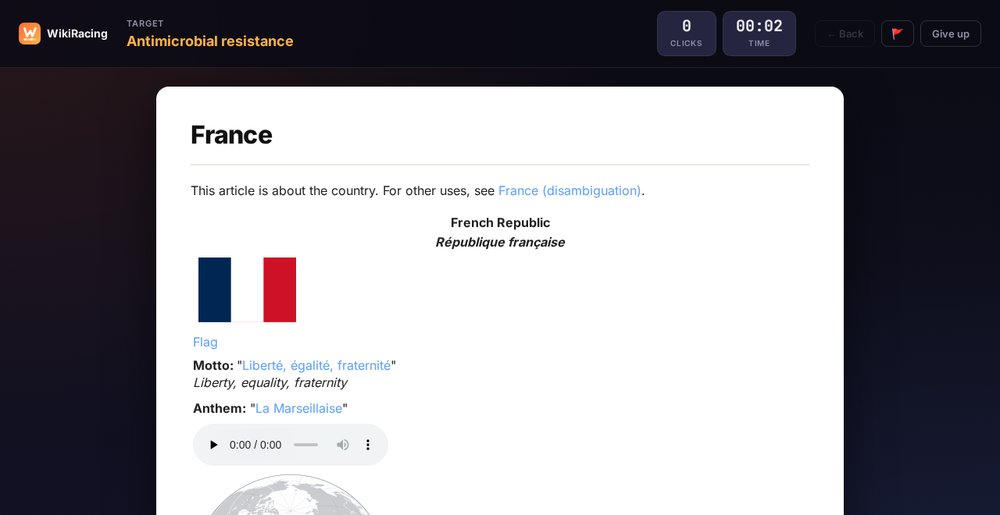
Start a manual race with "Baguette" as the starting article and "Antimicrobial resistance" as the target, and the gap looks huge before you've clicked anything. A loaf of bread and a global public-health crisis have, on the surface, nothing in common. Yet that pair resolves in a handful of clicks, because an article like "France" sits roughly halfway between the two: a traditionally French bread on one side, a country with its own pharmaceutical industry and public-health policy on the other.
That's the whole idea behind hub articles. A few dozen pages on Wikipedia are linked to from a disproportionate share of the rest of the encyclopedia, and spotting one mid-race turns a target that looked out of reach into a route that's almost obvious. A study by Stanford researchers on Wikispeedia, already covered in our piece on the history of Wikipedia racing games, watched this exact reflex play out across thousands of human players: faced with a distant target, most people converge on a small set of general articles first and only narrow their path afterward, rather than trying to find a direct route from the very first click.
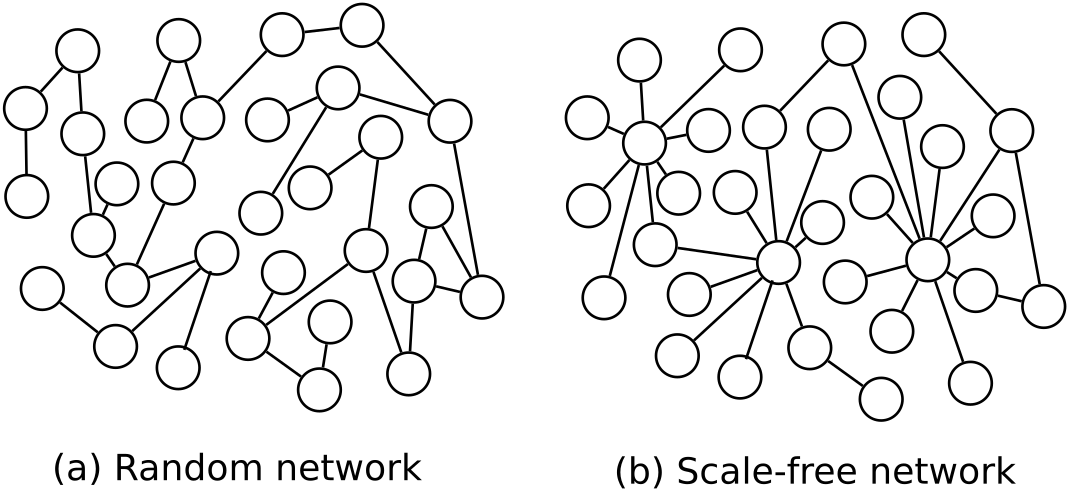
That's not an editorial accident. It's a property of the network itself. Like most large organic networks, Wikipedia's hyperlinks follow a distribution where a small minority of pages account for a majority of incoming links. A country article, a decade, a scientific field: these are exactly that kind of node. Here are the twenty that show up the most in practice, grouped into five families. I can spot most of these on sight by now, though it took a couple hundred games before that happened.
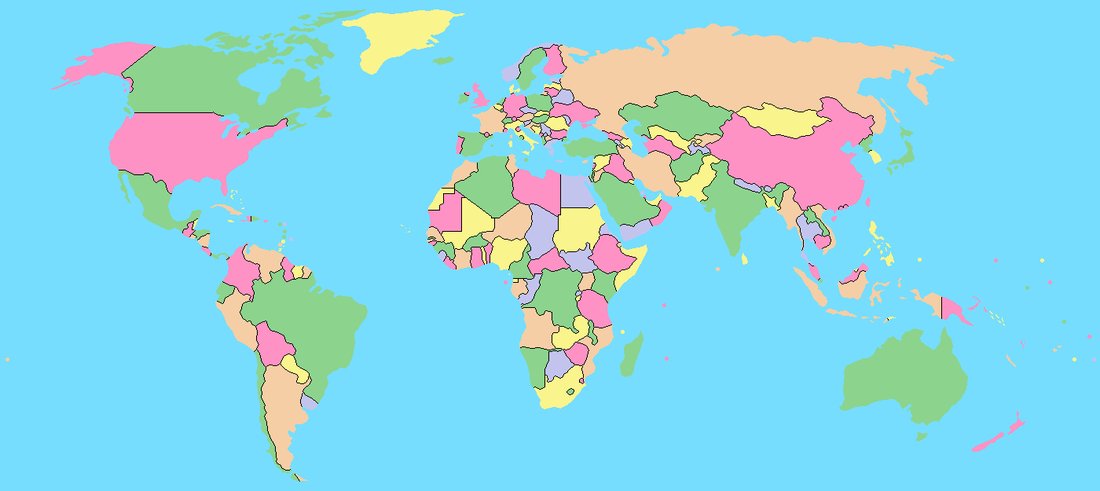
Geography: four essentials
- A major country is referenced in tens of thousands of articles: biographies, events, cultural works, companies, sports federations. Almost nothing on Wikipedia is entirely disconnected from at least one country, which makes this the single most reliable hub family overall.
- A world capital, Paris, London, Tokyo, Cairo..., stays tied to its country's history, art, and politics, and is often better-connected than the country article itself thanks to embassies, headquarters, and institutions based there.
- A continent: useful when your target has only a loose geographic connection, or when you don't know the specific country involved but can guess the general region.
- A major river or mountain range is often linked to several countries and cultures at once, which makes it a surprisingly good bridge between two seemingly unrelated places.
Time: four universal reference points
- A century connects every major event of the period, across all fields, from wars to inventions to art movements. Best used when you know the rough era but nothing more specific.
- An iconic decade (like the 1960s) works as a cultural and political crossroads, especially strong for targets tied to music, film, or major historical turning points.
- A pivotal year (a war's start, a major discovery, an Olympic year): often extremely well-connected, since Wikipedia's year articles are specifically built as cross-domain indexes of everything notable that happened.
- A calendar or era helps for ancient historical targets where a specific year isn't practical; a broader era (classical antiquity, the medieval period) narrows things down fast.
Science: four core fields
- Physics connects chemistry, astronomy, and technology. A strong bet whenever the target sounds like it involves matter, energy, or forces.
- Biology: a bridge to medicine, evolution, and ecology, useful for anything living, from a specific animal to a disease.
- Mathematics, frequently referenced in physics, computer science, and economics articles, forms a quiet but effective bridge between "hard science" targets and more applied fields.
- Computer science works as a modern hub to electronics, the internet, and tech companies; it's increasingly one of the best-connected fields on the entire site given how much of modern life routes through it.
Society: four pillars
- A world war: one of the best-connected articles in the entire encyclopedia, since it touches politics, technology, geography, and biography all at once.
- A major religion stays connected to history, art, philosophy, and geography. A strong hub whenever the target has any cultural or historical weight behind it.
- A language links the countries that speak it, literature written in it, and linguistics more broadly; useful for targets tied to a specific culture rather than a single country.
- Economics, a natural bridge between history, politics, and business, works especially well for targets involving trade, currency, or industry.
Culture: four classics
- Film connects countries, eras, and artists: a reliable hub for anything remotely related to entertainment or pop culture.
- Music is tied to countless biographies and cultural movements, and stays one of the densest hub types for anything from the 20th century onward.
- Literature, a bridge between languages, countries, and historical periods, turns out especially useful for older or more academic targets.
- Sport (football, the Olympics) connects countries, athletes, and major events, and tends to be extremely well-linked given how much cross-referencing exists between competitions, records, and athletes.
The Baguette to Antimicrobial Resistance route, for real
Back to the opening example. From "Baguette," "France" shows up in the very first lines of the article: the kind of link you find in the lead, not buried under a references section. From "France," instead of hunting for a direct link to the target (there probably isn't one), aim for a Society-family hub like "Public health" or "Pharmaceutical industry," exactly the kind of article that sits in a country page's health or economy section, and that itself links out to almost everything touching modern medicine, antimicrobial resistance included. The exact click count will depend on the day and the article's current revision (Wikipedia never stops changing), but the reasoning holds regardless of which version you land on.
A drill worth running: next time you play a themed challenge, try consciously naming which of these five families the target belongs to before you even start clicking. Over a handful of games, this becomes automatic. It's exactly the reflex that separates fast players from players who are technically correct but slow (took me longer than I'd like to admit to actually build this habit).
What happens when two families overlap
Plenty of targets belong to more than one family at once, and that's actually good news, not a complication: it just means you have more than one viable hub to aim for. A target like "the Eiffel Tower" sits at the intersection of Geography (France, Paris) and Culture (architecture, world's fairs); a target like "penicillin" sits at the intersection of Science (biology, chemistry) and Society (World War II, medicine). When you spot an overlap, head for whichever family's hub article is already closer to your current position rather than trying to plan the entire route from the article that feels most "correct" for the target.
A family each of WikiRacing's modes leans on differently
The five families aren't equally useful in every mode. Manual races and the daily challenge tend to draw on all five roughly evenly, since the pairs are essentially arbitrary. Themed challenges skew hard toward whichever family matches the theme. A Science challenge will almost always resolve through the Science family's own hubs faster than detouring through Geography or Culture, even when a geographic connection technically exists. The 300-level campaign leans more on Geography and Time early on before drifting toward Science and Society as the difficulty curve climbs, worth knowing if you're working through it level by level.
Combine this list with the back button technique so you never stay stuck on a dead end for long. And if you want to find out which of these five families still trips you up, the daily challenge leaderboard doesn't lie: it's usually the same one, game after game.
More articles
The History of Wikipedia Racing Games
From Wikispeedia to WikiRacing, how Wikipedia's rabbit hole became an entire game genre, with Stanford, an algorithmic solver, and 19 languages along the way.
What 205,000 Real Clicks Reveal About Wikipedia's Busiest Articles
Measured from 27,792 finished races across 19 Wikipedia editions: every language routes through its own country and the United States, 100 articles carry a seventh of all traffic, and the only truly universal connectors are brand names.
What WikiRacing Has in Common With Speedrunning Culture
Pair leaderboards, a campaign you can memorize, a daily challenge with the same pair for everyone: an honest comparison between WikiRacing and video game speedrunning culture.