How to Win at WikiRacing: 7 Strategies to Find the Shortest Path on Wikipedia
Published on 2026-08-02
Winning at WikiRacing isn't just luck.
I've probably watched way too many replays on the site's own activity feed at this point, and the fast ones all share a handful of habits. Not memorizing Wikipedia's link graph. Not knowing the target in advance. Nothing like that, just reading and navigation instincts that get sharper the more you play. Here's what actually moves the needle. And, at the end, the one habit that wastes more clicks than everything else on this list put together.
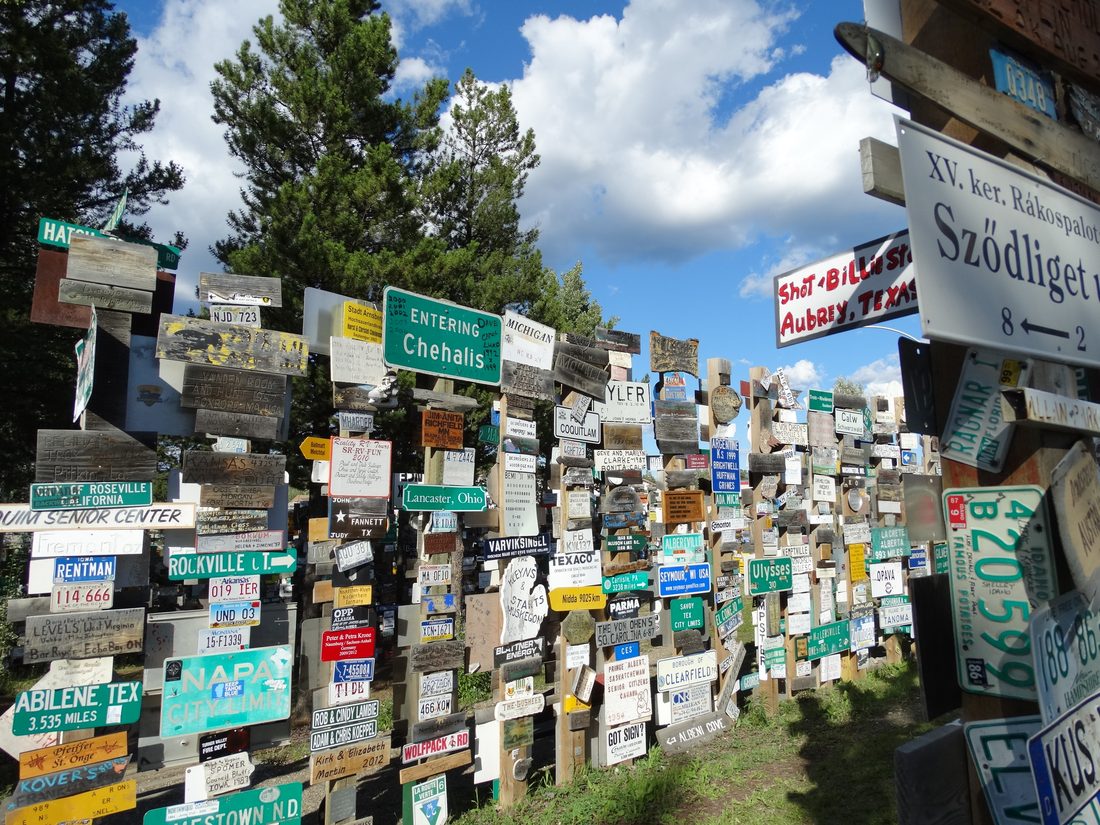
1. Think in categories, not straight lines
Beginners hunt for a link that goes straight to the target article. Better players hunt for a link to the target's category instead: a country, a historical period, a scientific field, a sport. Category-level articles are dense with links almost by definition. So from one of them there's nearly always a short path to whatever specific article sits underneath it.
Take the campaign's opening pair, Bread to Wheat. Tutorial level, deliberately easy, but the logic holds up on much harder pairs too: don't go hunting for the word "wheat" buried somewhere in the bread article, that's the slow way. Look for the ingredients section, the agriculture angle, anything that pulls you out of "a specific baked good" and into a broader food-and-farming neighborhood. Wheat's usually one hop from there.
2. Geographic hubs are the most reliable shortcut in the game
Countries, major cities, continents, they sit among the best-connected articles on Wikipedia, referenced by thousands of others: biographies, historical events, cultural works, companies, sports teams. If your target has even a loose tie to a place, routing through that country or city almost always closes the gap in one or two clicks.
Capitals in particular tend to out-hub their own countries, which surprised me the first time I actually noticed it. They pick up extra links from embassies, institutions, and headquarters that a plain country article just wouldn't attract naturally.
3. Dates and centuries work when nothing else does
An article about a specific year (take 1969) links to dozens of events, births, and creations across every field at once: music, politics, science, sport. Know roughly your target's era and this becomes a shortcut no matter the topic, since year articles are built as cross-domain indexes, not as an article about any one subject.
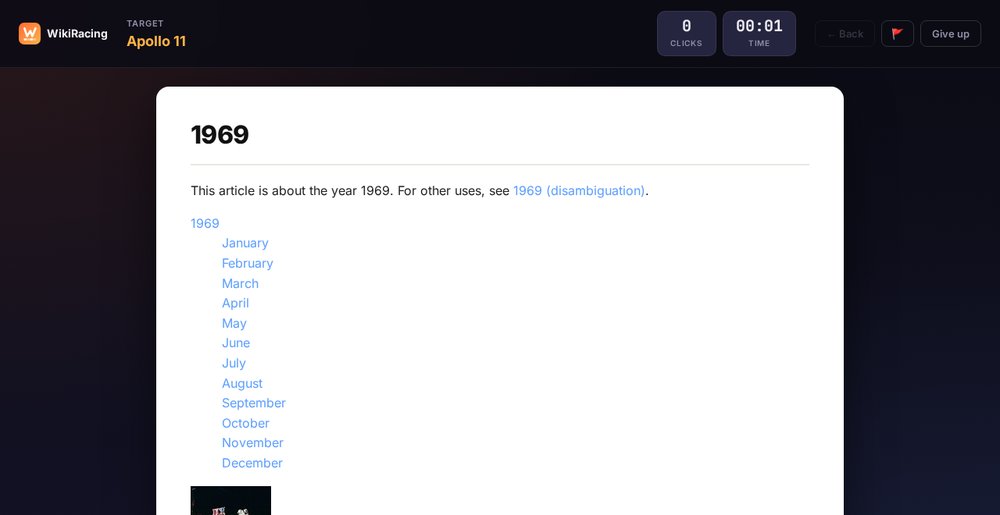
This is exactly why the site's themed challenges keep a target tied to a specific decade even when the starting article gives no hint of the era. That's a deliberate design choice on our end, not an accident.
4. Read the first two sentences before you click anything
A Wikipedia article's opening line almost always compresses the whole subject into one sentence, and the important links sit right there, bolded, before you'd ever need to scroll. Skip straight to an infobox or a "See also" list instead, and you'll usually burn three clicks finding what the first sentence already handed you for free.
5. Go back the second a path feels wrong
A dead end costs one extra click. Stubbornness costs way more. Three clicks in and you don't feel any closer to a recognizable hub, a place, a date, a broad field? That's not bad luck. That's the article telling you to turn around.
6. Practice against your own record, not a stranger's
The daily challenge gives everyone the same pair. Unlike a random manual race, you can lose today, come back tomorrow, and replay the exact same two articles to test whether a different route would actually have been faster. No other mode really lets you isolate one single decision like that.
7. In multiplayer, reading speed beats an optimal path
In a live race, the winner isn't whoever has the mathematically shortest route on paper. It's whoever reads fastest and commits without hesitating, full stop. A correct-but-slow path loses to a merely-decent-but-fast one, every single time. Ten seconds of deciding barely registers when you're playing solo. Against real opponents? That's often the whole gap between first place and third.
The one habit that costs more than all the others combined
Over-reading an article instead of skimming for blue text costs a click. Ignoring the infobox costs a click. Waiting for an exact word match ("solar panel" instead of just accepting "photovoltaic effect") costs a click. Refusing to backtrack out of pure stubbornness costs the whole race. Nearly every slow replay I've sat through comes back to that same moment: someone senses they went the wrong way and pushes forward anyway, rather than eating the one-click cost of just admitting it.
Start a quick race, try a themed challenge, or take on today's daily. See which of these actually changes your time. (Spoiler: it's usually the backtracking one.)
More articles
20 Wikipedia Hub Articles to Know to Win Faster at WikiRacing
A list of highly-connected article types on Wikipedia (countries, decades, scientific fields) to keep in mind for finding shortcuts mid-race.
The History of Wikipedia Racing Games
From Wikispeedia to WikiRacing, how Wikipedia's rabbit hole became an entire game genre, with Stanford, an algorithmic solver, and 19 languages along the way.
What 205,000 Real Clicks Reveal About Wikipedia's Busiest Articles
Measured from 27,792 finished races across 19 Wikipedia editions: every language routes through its own country and the United States, 100 articles carry a seventh of all traffic, and the only truly universal connectors are brand names.