Why Supporting Wikipedia and Its Community Matters More Than Ever
Published on 2026-08-05
Wikipedia is one of the most visited websites in the world: free to access, ad-free, available in hundreds of languages. We open it out of habit to check a date, a name, or a definition, without always realizing that every article was written, edited, and verified by volunteers, not by a company and not by an algorithm.
Understanding how this project actually holds together changes how you look at it. It's worth remembering every single time a WikiRacing game hands you a real Wikipedia article to read: that article exists only because someone, somewhere, chose to write it for free.
An encyclopedia run by volunteers, not a company
Unlike most of the world's most-visited websites, Wikipedia shows no ads and belongs to no corporation. Its content is written and reviewed by tens of thousands of active volunteer editors worldwide, coordinated loosely through community consensus rather than a corporate editorial hierarchy, and hosted by the Wikimedia Foundation, a non-profit funded almost entirely by small individual donations rather than advertising or a single wealthy backer. This model explains the project's strength (a rare degree of editorial independence at this scale, with no shareholder or advertiser ever able to quietly influence an article) as much as its fragility: without a steady stream of new contributors and donations, the encyclopedia's quality and coverage can't sustain themselves on their own.
It's easy to forget just how unusual this is. Nearly every other top-20 global website is run by a large company optimizing for engagement, advertising revenue, or a subscription business. Wikipedia is the one major exception, and that exception only survives because enough people keep choosing to maintain it as a public good rather than a product.
The content gap: languages, gender, regions
Not every language edition of Wikipedia is equal. English has over 6 million articles; many other languages have a fraction of that, with far smaller volunteer communities and, in some cases, only a handful of highly active editors keeping an entire language edition alive. Playing WikiRacing across 19 different languages makes this obvious fast: the same starting article doesn't lead to the same detours depending on which edition you're browsing, simply because some topics are far less developed there. A well-documented scientific concept in English might be a two-paragraph stub in a smaller language, with far fewer outgoing links to route through.
The same imbalance shows up in biographies of women (still heavily underrepresented compared to men across essentially every language edition), in topics related to the Global South (often less documented than equivalent topics from North America and Europe, simply because fewer editors with local knowledge have contributed), and in recent history versus distant history (events from the last few decades tend to be extensively covered, while entire centuries of some regions' history remain thin by comparison).
The initiatives that keep the project alive
Closing these gaps doesn't happen on its own. It's the work of concrete community programs, run by volunteers and local Wikimedia chapters around the world, often with very little funding or fanfare.
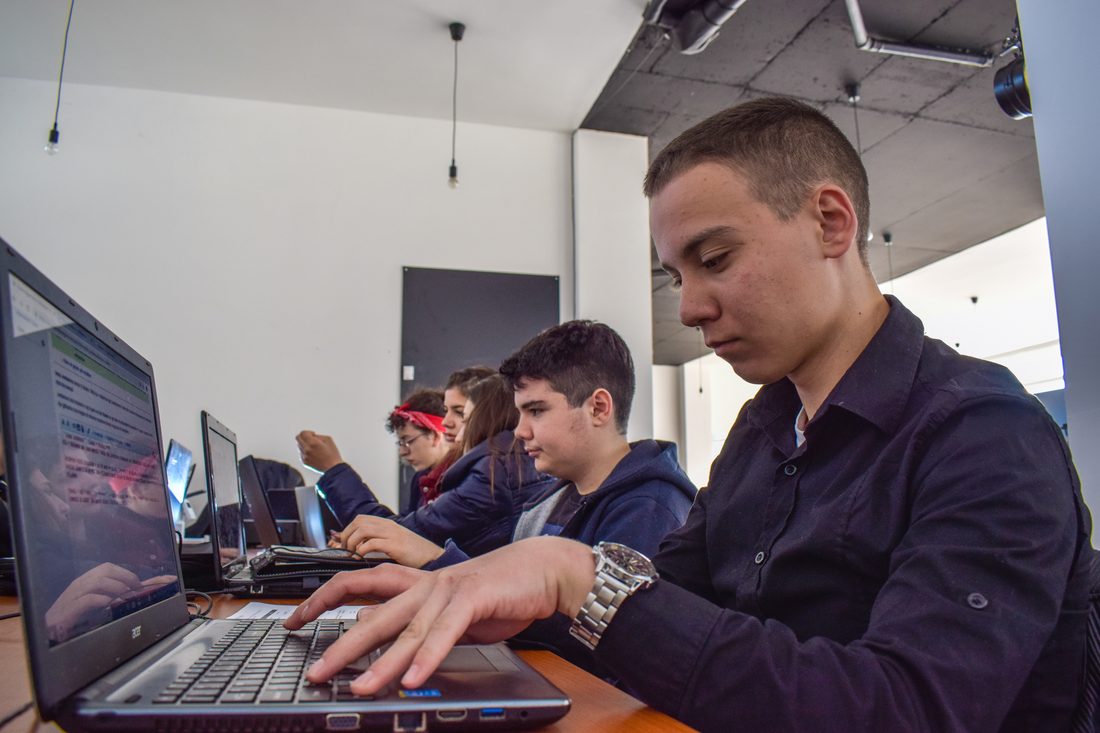
- Edit-a-thons bring people together, often through libraries, universities, or museums, to create or improve articles on a specific topic in a single day. These events are frequently the entry point for brand-new editors who might never have started contributing on their own.
- Wikipedia Loves Monuments: an annual photo contest that has helped illustrate tens of thousands of historical monuments worldwide, run entirely by volunteer photographers documenting heritage sites in their own countries.
- GLAM partnerships (galleries, libraries, archives, museums) are cultural institutions opening up their archives to enrich Wikipedia and Wikimedia Commons with sources and freely licensed images, turning material that would otherwise sit in a closed archive into something anyone can reference.
- Translation drives carry a well-documented article from one language into another instead of starting from scratch, one of the most efficient ways to close the gap between large and small language editions.
- Targeted projects like Women in Red focus specifically on creating biographies of women to close the representation gap, tracking progress with the same kind of systematic rigor you'd expect from a research project rather than an informal volunteer effort.
A safeguard against misinformation
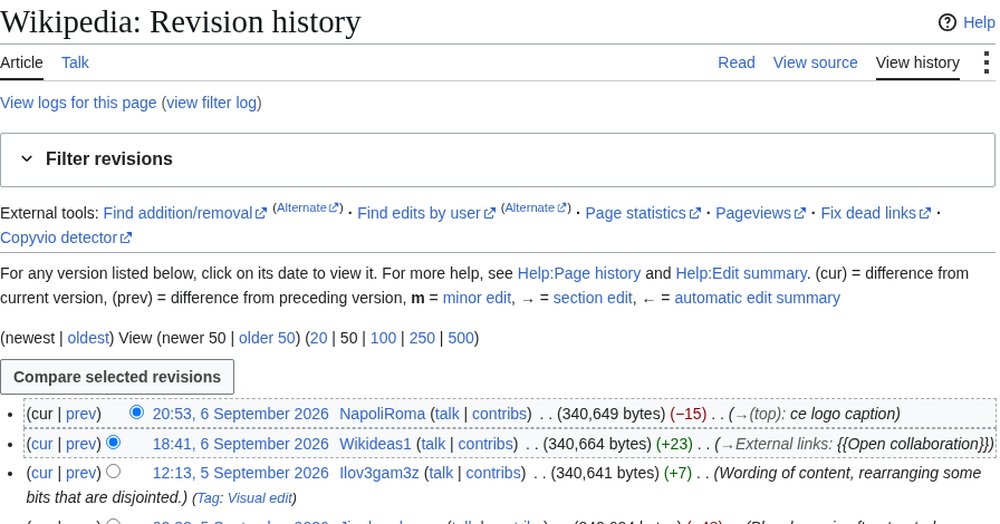
At a time when information spreads fast and loose across social media with little accountability, Wikipedia's model (cited sources required for any non-trivial claim, a fully public edit history for every single article, disagreements settled on talk pages through discussion instead of behind closed doors) remains one of the most transparent processes freely available anywhere online. It's not a perfect system: vandalism happens, biases creep in, and coverage gaps persist. But it's an open one, and that's the key difference. Anyone can check where a piece of information came from, who wrote it, when, and what was debated before it was accepted into the article. Supporting the initiatives that train new contributors also means supporting that specific culture of verification, since it only works as well as the community actively maintaining it.
The power of small contributions
Contributing to Wikipedia doesn't require being an expert on the topic or on wiki syntax. Fixing a typo, adding a source to an unverified claim, translating a missing paragraph, making a small donation to the Wikimedia Foundation, or simply flagging an error through the article's talk page: each of these actions, however small, adds up on a project that depends entirely on how many people invest even a little in it. A single corrected fact or added citation might be read by thousands of people over the following years, long after the person who fixed it has forgotten doing so.
WikiRacing only exists because Wikipedia exists: every race sends players through real articles, written by real people, across 19 different language editions, each with its own community, its own gaps, and its own quiet volunteers keeping it going. Playing it, you rediscover just how rich the encyclopedia is, and sometimes just how uneven it is from one language to another. Next time a race drops you on an article riddled with typos or surprisingly short, that's also a reminder that you could improve it yourself in two minutes, and that doing so is exactly the kind of small contribution this whole project runs on.
More articles
How to Win at WikiRacing: 7 Strategies to Find the Shortest Path on Wikipedia
7 concrete strategies to get better at WikiRacing: thinking in categories, spotting hub articles, and optimizing your clicks and reading speed.
20 Wikipedia Hub Articles to Know to Win Faster at WikiRacing
A list of highly-connected article types on Wikipedia (countries, decades, scientific fields) to keep in mind for finding shortcuts mid-race.
The History of Wikipedia Racing Games
From Wikispeedia to WikiRacing, how Wikipedia's rabbit hole became an entire game genre, with Stanford, an algorithmic solver, and 19 languages along the way.