Why WikiRacing Runs on 19 Different Wikipedias, Not Just 19 Translations
Published on 2026-08-16
Most multilingual apps translate a fixed set of screens and call it done. WikiRacing does something more involved: switching the language switcher doesn't just change the buttons and labels, it changes which Wikipedia edition you're actually racing on, down to the domain the game is fetching articles from.
That single design choice touches almost everything else about how the game works, from random-article pickers to matchmaking to the campaign itself. It's the reason a "simple" language addition on this site actually means translating an interface, sourcing an entire dataset of verified article pairs, and checking each one against a completely different encyclopedia.
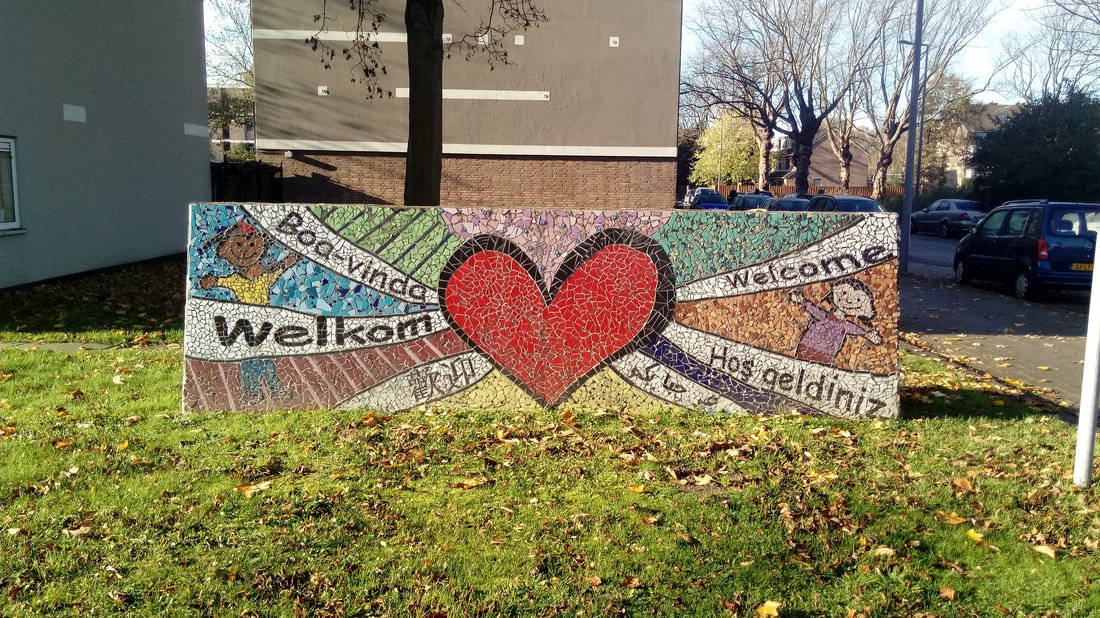
Not a translated UI over one Wikipedia, but 19 separate ones
Each of the 19 supported languages points at its own Wikipedia edition, from its own domain to its own set of categories used for the random-article pickers to its own namespace names for filtering out non-article pages. Play in French and you're navigating fr.wikipedia.org; switch to Japanese and you're on ja.wikipedia.org instead; switch to Arabic and you're reading right-to-left on ar.wikipedia.org. A completely different set of articles, links, and hub structures each time, not the same content wearing a different label.
Why these particular 19 languages
French, English, Spanish, German, Italian, Portuguese, Polish, Japanese, Korean, Indonesian, Russian, Vietnamese, Turkish, Dutch, Swedish, Ukrainian, Czech, Arabic, and Chinese were added one at a time rather than all at once, each one bringing its own themed article categories verified to actually exist on that specific edition, its own namespace rules for blocking non-article links (a "Talk" or "Category" page looks completely different depending on the language), and its own full translation of every string in the interface. Several hundred strings per language, none of it machine-translated wholesale without review.
Arabic in particular required work the others didn't: it's the site's first right-to-left language, which meant checking that the entire layout, not just the text, correctly mirrors itself for a reading direction that flows the opposite way from every other supported language.
What happens when the editions don't line up
Wikipedia's language editions are wildly uneven in size. Some have millions of articles, others a fraction of that, and even among large editions, coverage of any specific narrow topic can vary enormously. The 300-level campaign runs into this directly: a handful of levels don't have an article pair with a natural direct match in every single language, so those specific cases get a carefully chosen substitute article in that language rather than either breaking outright or silently falling back to English. The goal has always been that every language plays a genuinely complete campaign in its own edition, not a patched-together mix.
A lesson ranked duels had to learn the hard way
The multiplayer matchmaking queue used to be a single global pool across all languages, on the theory that a bigger pool means faster matches. In practice, pairing a French-speaking player with a Japanese-speaking one for a timed race, even once the two sides were fixed to load the same article, was still a rough experience for whoever landed on the language they didn't pick, since reading fluency, not just having the right page open, is the entire point of the game. The queue is now split per language instead, trading a smaller pool for a match that actually makes sense to play from both sides.
Try switching language mid-session
Because the switch is real and not cosmetic, picking a different language before a race is also a quick way to see how differently the same subject connects to other topics. A category, a translated summary, or a completely different set of "see also" links can put you one click away from the target in one edition and five clicks away in another. It's also a genuinely interesting way to notice the coverage gaps discussed in our piece on Wikipedia's volunteer community: the same starting article can feel richly detailed in one language and sparse in another, purely as a function of how many editors that specific edition has.
Play in your language, or someone else's. Pick your language from the switcher in the top corner, start a race, and see which Wikipedia, and which path, you actually end up on.
More articles
Inside WikiRacing's 300-Level Campaign: A Solo Path from Warm-Up to Mastery
How WikiRacing's Campaign mode works: 300 levels of rising difficulty, saved progress, and a dedicated leaderboard. The only mode that races you against yourself.
Community Challenges: Design Your Own WikiRacing Route and Share It
WikiRacing isn't limited to curated challenges: any player can build their own 1-to-5-pair route, publish it, and challenge others to beat their time.
How WikiRacing's ELO Ranking System Actually Works
Every ranked duel moves a number. Here's what that number actually means, how much a single win or loss changes it, and why casual races never touch it at all.